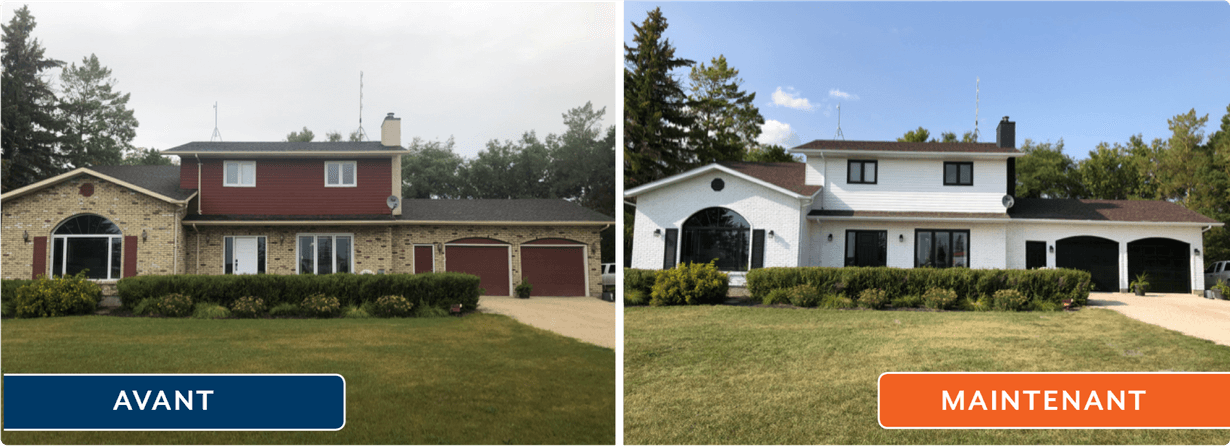







Factory durable finish directly on-site. That’s the Spray-Net way.


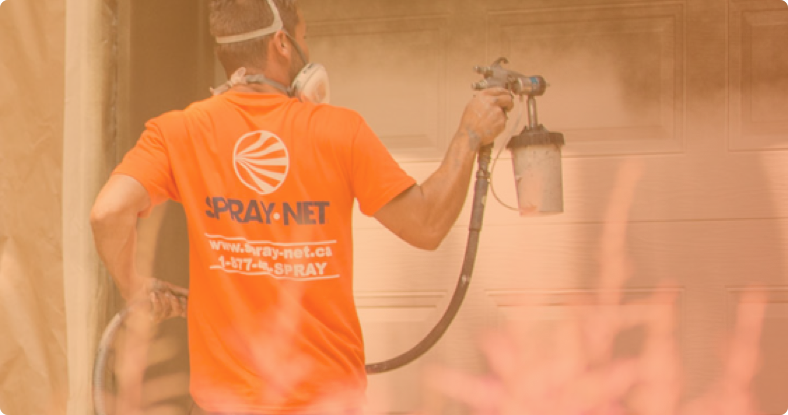
When most people think of painting, they think of it as maintenance. Something to do every few years to keep things looking fresh. And on certain surfaces, not even that — many are deemed unpaintable. That’s conventional painting.
At Spray-Net we refinish surfaces you wouldn’t typically think you can paint, and everything we do lasts and looks as if it was new.
Everyone says what they do is “better” so it’s reasonable to ask how. Here’s how we do it.
It started with a frustration most painters never solve
Spray-Net was founded by a conventional painter who was fed up with one thing: brush and roller marks. No matter how skilled the painter, traditional application methods leave texture. The surface looks painted — not new.
Spraying seemed like the obvious fix. And it solved part of the problem. But it revealed the next layer: the coatings themselves weren’t built for it. They were formulated for brush and roller, optimized for ease of use and broad compatibility, and full of compromises that showed up years later as scratching, blistering, and peeling.
The real solution turned out to be a combination of things together — spray application combined with coatings specifically formulated to work with it, tailored for each specific surface being painted. That combination, along with a set of patented processes developed over years of R&D, is what makes Spray-Net different from anything else on the market.
Every paint on the market makes a trade-off. Ours doesn’t have to.
Paint formulation is always a balancing act between four competing constraints: application ease, odor and toxicity, cost, and final film properties. Pull hard on any one of them and the others suffer. A coating engineered for maximum hardness might be brittle, difficult to apply, and too toxic for residential use. One optimized for low odor and easy application likely compromises on durability. Manufacturers find the middle — which means no one gets the best of any of them.
The biggest constraint driving those trade-offs is one most people never think about: the painter. Paint manufacturers have no control over who applies their product, with what equipment, or under what conditions. So they formulate for everyone — any painter, any surface, any condition. That broad compatibility is exactly what forces the compromises.
Spray-Net removes that constraint entirely. Because we go from formulation to application and control the entire process — including the equipment we formulate for — we can optimize for outcomes that are simply not achievable in a general-use product. No fillers. Highest-performance resins and additives, selected for each surface. We can push further on final film properties than any shelf product because we know exactly how, where, and with what the coating will be applied.
The formula is built entirely around how the coating performs on your home — and our warranty against peeling reflects that commitment.
Most coatings are one-size-fits-all. Ours aren’t.
Vinyl, aluminum, stucco, brick, wood, cabinets — these are completely different materials with completely different properties. Most latex paints treat them as the same. They’re not.
Each Spray-Net coating is engineered specifically for the surface it goes on — the resin system, the flexibility, the bonding mechanism, the hardness — all tuned for how that material actually behaves over time and what outcome you need from it.
-
- Vinyl siding expands and contracts with temperature. A standard coating can’t keep up — it micro-cracks, moisture gets in, and peeling follows. Our patented vinyl process uses a VinylShield base coat that increases the heat distortion threshold of the vinyl itself, combined with a solar reflective topcoat that reduces heat absorption at the surface. The result is vinyl that’s more resistant to warping than it was before we touched it, and the ability to apply a wider range of colors to it.
-
- Aluminum requires good washability and flexibility — not so glossy that it accentuates imperfections or oil canning on longer siding lengths, but not so flat that it already looks dull. That level of precision is only possible with a surface-specific formula. The result is aluminum that looks clean, even, and consistent.
-
- Doors and high-traffic surfaces get coatings with enhanced mar and scratch resistance — because a front door takes abuse that a standard exterior formula won’t survive. A slightly higher sheen makes it look like a new door.
-
- Brick gets a penetrating stain, not a film coating. It soaks into the brick rather than sitting on top of it. A chemical bond means peeling is no longer a consideration.
-
- Stucco is handled by Liqua-Wrap, our flexible stucco coating — formulated to bridge hairline cracks and remain flexible as the substrate moves over time. A rigid film on stucco is a film that will eventually fail. We call it a liquid stucco because that’s how it acts. Think spraying on a new coat of stucco to wrap your home. Hence the name.
-
- Cabinets get the same logic applied indoors — a coating and primer formulated specifically for spray application with no odor, designed to cure fast so your kitchen is back to normal quickly, and hard enough to stand up to daily use. All done in one to two days when combined with our process and specialized equipment.
Why latex paint can’t guarantee what we can
Most residential exterior coatings are latex — water-based emulsions where the polymer particles need to knit together as the water evaporates, forming what’s called a continuous film. When conditions aren’t ideal — and it’s almost impossible to get ideal conditions — particles that are too hard or too soft at the moment of coalescence create a film with gaps and weak points. That’s where peeling starts. And even when applied correctly, conventional latex films are generally not as densely packed or free from air pockets as more industrial paint systems.
Latex is inherently a compromise. The additives needed to make it apply easily on any surface, for any painter, work against the density and integrity of the final film. It is structurally difficult for a latex product to get both application and performance right at the same time.
Spray-Net uses industrial-grade two-component products or self-crosslinking formulas depending on the surface and the hardness required. In both cases, the film doesn’t rely on ideal conditions to form correctly. Using our patented process, we adjust dry time through proprietary additives to either slow down or speed up film formation. This guarantees a continuous, densely bonded result — something latex can’t offer regardless of how it’s applied.
The weather on your job day is part of the formula
Even with the right chemistry, application conditions matter. As a coating cures, it needs to coalesce into a continuous film within the right time window. Too fast or too slow — because of heat, cold, or humidity — and you compromise the result.
Spray-Net applicators adjust the formulation on-site based on actual conditions, controlling the cure window so the film forms correctly every time. It’s not a convenience feature. It’s how we guarantee a consistent result whether your job runs on a hot dry afternoon or a cool humid morning, and it’s part of our patented process.
The goal was never to make your home look repainted. It was to make it look new.
No brush marks. No roller texture. No evidence of application. Just a surface that looks like it came out of a factory — because the chemistry, the process, and the application method were all designed with exactly that outcome in mind.
That’s what Spray-Net was built to deliver. And it took developing our own coatings and processes to get there. Most people assume that level of finish comes at a significant premium. It doesn’t — and there’s a reason for that. A conventional paint manufacturer’s business is selling paint. Ours is delivering the best possible finish on your home. Because we formulate and apply our own coatings with no middleman, we use higher-quality ingredients than anything on a shelf, and the savings from cutting out the supply chain go directly into the product and back to you. The result is a system that can be applied consistently, adjusted to the weather, and specifically tailored for what each surface needs — for a price that’s not far off what you’d pay a conventional painter.
That’s the Spray-Net way.
Want to see how we do it? Here’s a behind the scenes video: How we make paint
Subscribe to our blog & newsletter.
This is the advantage of subscribing to our blog.